Ingredient evidence guide
NAC supplements (N-acetyl-L-cysteine): benefits and risks
Prescription acetylcysteine has defined drug uses. A retail NAC capsule still needs product-specific evidence and a coherent label.
Key takeaways
- NAC is N-acetyl-L-cysteine, a derivative of the amino acid L-cysteine. [1] [11] NAD stands for nicotinamide adenine dinucleotide, so the two initials name different molecules. [4]
- Current prescription labels cover intravenous acetylcysteine as an acetaminophen-overdose antidote [1] and acetylcysteine solution for inhalation or oral administration. [2] Those prescription uses do not validate wellness claims for a retail capsule.
- Current U.S. Food and Drug Administration (FDA) guidance describes enforcement discretion for certain otherwise lawful products labeled as dietary supplements. [3] FDA does not approve dietary supplements for safety and effectiveness before sale. [10]
- Large chronic obstructive pulmonary disease (COPD) trials produced mixed results. The 2014 Chinese trial reported fewer exacerbations. [5] The 2005 European trial did not. [6] The 2024 trial missed both coprimary endpoints. [7] A July 2026 review favored NAC for exacerbations but did not reach its trial-sequential information size. [9] The angiography trial found no benefit for its studied kidney outcomes. [8]
- The National Institutes of Health (NIH) Office of Dietary Supplements (ODS) reports gastrointestinal side effects from oral NAC and potential interactions involving blood pressure, anticoagulants, and nitroglycerin. [11]
- Medication, laboratory-test, and surgery questions belong in a professional review. [10]
Prescription uses do not establish general wellness benefits
Bottom line
NAC has defined prescription uses, while the selected trial evidence remains tied to specific clinical populations and endpoints and does not establish a general wellness benefit. [1] [2] [5] [6] [7] [8]
FDA's label fields cover serving size, servings per container, dietary ingredients, and amount per serving. [10] For this review, NutriScore also checks seller directions, current lot evidence, regulatory category, and claim language before price. [23] [26] [14]
![[23]](/images/evidence/natures-body-nac/2026-07-29-side-label.webp)
![[26]](/images/evidence/natures-body-nac/2026-07-29-lab-report-list.webp)
Read NAC research by naming the product, route, population, amount, and outcome that were studied. An intravenous infusion, an oral trial medicine, and a retail capsule each carry evidence only for their own formulation and setting. [1] [5] [22]
![[22]](/images/evidence/natures-body-nac/2026-07-29-product-front.webp)
NAC and NAD name different molecules
The current DailyMed label describes acetylcysteine as the N-acetyl derivative of naturally occurring L-cysteine. [1] It also describes downstream cysteine metabolism, including glutathione formation. [1]
The label presents that biochemical pathway as probable rather than established. [1] The label's glutathione mechanism is discussed in the specific setting of acetaminophen overdose. [1] The mechanism alone does not demonstrate an everyday outcome from a capsule in a healthy person.
Readers looking for nicotinamide riboside, nicotinamide mononucleotide (NMN), or cellular-energy marketing can use the NAD booster guide. One changed letter points to a different evidence question.
Prescription acetylcysteine and retail NAC answer different questions
One current prescription label covers intravenous acetylcysteine as an acetaminophen-overdose antidote. [1] Another covers acetylcysteine solution for inhalation as a mucolytic agent or oral administration as an acetaminophen antidote. [2]
Scroll horizontally to read every table column.
| Check | Prescription labels | Retail product evidence |
|---|---|---|
| Form | Intravenous injection, or a separate solution label for inhalation and oral administration [1] [2] | NAC capsule [22] |
| Stated role | Acetaminophen-overdose antidote; the inhaled solution also has a prescription mucolytic role [1] [2] | Package identifies the product as NAC [22] |
| Amount language | Injection label: clinical, weight-based regimen. Solution label: volume and frequency vary by route. [1] [2] | Front-label amount and side-label direction [22] [23] |
| What the source proves | The prescription labels and their stated clinical uses | What the captured package panels say |
A retail NAC capsule is not a substitute for urgent assessment after an acetaminophen overdose. [1] The drug label describes time-sensitive testing and treatment. [1] That clinical process cannot be reduced to a home-use instruction.
The inhaled and oral prescription solution also carries its own formulation, indications, and clinical instructions. Its label adds legitimate drug history without proving an outcome for the featured capsule. [2] [22]
Large trials show why indication and endpoint matter
Three large chronic obstructive pulmonary disease trials and one angiography trial answer defined questions in patient populations. [5] [6] [7] [8] Two reviews address exercise and recovery claims, but their methods and conclusions differ. [27] [28]
Scroll horizontally to read every table column.
| Trial | Population and design | NAC arm | Main reported result |
|---|---|---|---|
| Placebo-controlled study on efficacy and safety of N-acetylcysteine high dose in exacerbations of chronic obstructive pulmonary disease (PANTHEON) | 1,006 adults with moderate to severe COPD randomized at 34 hospitals in China. The primary analysis included 482 participants per arm after at least one dose and one assessment. [5] | 600 mg twice daily for one year [5] | 1.16 versus 1.49 exacerbations per patient-year; risk ratio 0.78, 95% confidence interval (CI) 0.67 to 0.90, p=0.0011. [5] |
| Bronchitis Randomized on NAC Cost-Utility Study (BRONCUS) | 523 people with Global Initiative for Chronic Obstructive Lung Disease (GOLD) stage II or III COPD randomized at 50 centers. The reported exacerbation analysis included 506 participants. [6] | 600 mg oral NAC daily for three years [6] | No difference in yearly forced expiratory volume in one second (FEV1) decline or exacerbations. The exacerbation hazard ratio was 0.99, 95% CI 0.89 to 1.10, p=0.85. [6] |
| 2024 COPD trial | 968 adults with mild to moderate COPD randomized; 924 entered the full analysis set for total exacerbations, and 744 entered the lung-function analysis. [7] | 600 mg twice daily for two years [7] | The coprimary total-exacerbation result was not significant: 0.65 versus 0.72 per patient-year; risk ratio 0.90, 95% CI 0.80 to 1.02, p=0.10. FEV1 did not differ at 24 months. An exploratory secondary outcome, moderate or severe exacerbations, was 0.34 versus 0.45 per patient-year; risk ratio 0.76, 95% CI 0.64 to 0.90, p=0.001. The trial report says this result was not adjusted for multiple comparisons. [7] |
| Prevention of Serious Adverse Events following Angiography (PRESERVE) | In a 2-by-2 factorial design comparing intravenous sodium bicarbonate with sodium chloride and oral acetylcysteine with placebo, 5,177 patients at high risk for renal complications were randomized before angiography; 4,993 entered the modified intention-to-treat analysis. [8] | 1,200 mg orally per dose. Two doses bracketed angiography, followed by twice-daily use for four days, for 10 doses total. [8] | The primary composite occurred in 4.6% with acetylcysteine and 4.5% with placebo; odds ratio 1.02, 95% CI 0.78 to 1.33, p=0.88. The trial found no benefit for the studied kidney outcomes. [8] |
The rows cannot be read as a head-to-head comparison. Their populations, treatment periods, outcomes, and analysis populations differ. [5] [6] [7] [8]
A July 2026 PeerJ review included 14 randomized COPD trials and 2,856 participants overall. Its acute-exacerbation analysis included 2,609 participants and reported a risk ratio of 0.87, 95% CI 0.79 to 0.96, p=0.006, and an I-squared heterogeneity statistic of 60%. Across eight studies and 2,297 participants, adverse events did not differ significantly, with a risk ratio of 1.09, 95% CI 0.99 to 1.20. The review found no clear FEV1, forced vital capacity (FVC), St George's Respiratory Questionnaire (SGRQ), or glutathione benefit. Its trial-sequential analyses found that neither the exacerbation nor adverse-event result reached the required information size. The review's included-study table did not contain the separately discussed 2024 trial, so this article does not treat it as a complete synthesis of current trials. [9] [7]
Exercise and recovery reviews conflict
A 2024 review included 20 controlled studies using oral and intravenous NAC. Its narrative route counts conflict with Table 3, so this guide does not present an exact route split. [27] The review reported a low-certainty muscle-soreness mean difference of -0.43, 95% CI -0.81 to -0.04, and a lactate mean difference of -0.56 mmol/L, 95% CI -1.07 to -0.06. [27] A 2022 review of 37 papers and 1,388 participants found no considerable overall recovery effect. Its abstract reported a creatine kinase-MB signal in an amount subgroup of at least 100 mg/kg. [28] The different routes, outcomes, and study sets prevent either review from validating the featured retail capsule.
The PANTHEON abstract names Hainan Zambon Pharmaceutical as funder. [5] The full report says report preparation occurred in collaboration with the sponsor and identifies one author as a Hainan Zambon employee. [5] BRONCUS reports funding from Zambon Group. [6] The 2024 COPD trial reported public and institutional grants. [7] Zhejiang Jinhua Pharmaceutical made and supplied NAC and matched placebo; the authors reported no company or funder role in study conduct, analysis, interpretation, manuscript preparation, or publication. [7]
PRESERVE reported government funding from the United States and Australia. [8]
The clinical trials did not test routine use in healthy adults or the featured Nature's Body product. [5] [6] [7] [8] [22] The exercise reviews do not establish a repeatable recovery benefit from this capsule. [27] [28] [22]
Mechanism language cannot fill the gaps in clinical evidence
Established in the cited sources
NAC's chemical identity, the cited prescription labels, FDA's current enforcement-discretion policy, and the selected trial and review results described above. [1] [2] [3] [5] [6] [7] [8] [27] [28]
A plausible pathway can explain why a trial was worth running. The pathway alone cannot supply participants, a comparator, a measured outcome, or product verification. [5] [6] [7] [8]
Finished-product claims deserve finished-product evidence. Ingredient research can inform a hypothesis, but it does not confirm capsule identity, purity, stability, or real-world benefit for every bottle carrying the same acronym.
FDA's NAC policy is limited enforcement discretion
FDA's August 2022 final guidance says the agency determined that NAC is excluded from the statutory dietary-supplement definition. [3] The same guidance describes enforcement discretion for certain NAC-containing products labeled as dietary supplements. [3]
The policy is limited to products that, apart from NAC's statutory exclusion, could be marketed lawfully as dietary supplements and have no other Federal Food, Drug, and Cosmetic Act violation. [3] The guidance is nonbinding and does not clear every NAC bottle, claim, or seller. [3] FDA says this discretion lasts until it completes notice-and-comment rulemaking to allow NAC in or as a dietary supplement, or denies the pending rulemaking request, unless it identifies a safety concern or revises the guidance. [3]
FDA's rules-under-development page lists a July 2026 target for a proposed rule titled "Rulemaking to Provide by Regulation that an Ingredient Is Not Excluded From the Dietary Supplement Definition." [20] The Office of Information and Regulatory Affairs (OIRA) records a proposed rule with that title as received on June 5, 2026. [21] Neither public listing names the ingredient, so this guide does not identify that proposal as an NAC rule. [20] [21]
Regulatory translation
FDA premarket approval is absent for dietary supplements. The agency says it lacks authority to approve them for safety and effectiveness, or approve their labels, before sale. [10]
Oral NAC has specific side effects and interaction questions
The NIH Office of Dietary Supplements fact sheet reports that the American College of Chest Physicians and Canadian Thoracic Society note a low risk of adverse effects from NAC. It also reports a typical amount of 600 mg per day and that up to 3,000 mg per day appears safe and well tolerated. [11] The source does not establish a personal dose or verify a finished product.
NIH's Office of Dietary Supplements reports nausea, vomiting, abdominal pain, diarrhea, indigestion, and upper-abdominal discomfort among side effects of oral NAC. It also notes possible additive effects with anticoagulant or blood-pressure medicines and reports that combining NAC with nitroglycerin can cause low blood pressure and severe headaches. [11]
PANTHEON offers one route-qualified trial comparison. [5] Adverse events occurred in 146 of 495 participants who received NAC and 130 of 495 who received placebo. [5] Serious adverse events affected 48 NAC participants and 46 placebo participants. [5] Five participants died: four in the NAC group and one in the placebo group. Investigators considered none of those deaths related to either study product. [5] Those counts belong to that COPD trial and do not establish an event rate for healthy users or the featured capsule. [5] [22]
Medication, surgery, overdose, and pregnancy need separate checks
FDA advises discussing medication, lab-test, and planned-surgery risks with a health care professional before use. [10] Suspected acetaminophen overdose belongs in the time-sensitive clinical process described by the prescription label. [1] The pictured product label excludes people under 18 and pregnant or lactating women. [23]
For compendial monograph applications concerning adults 18 and older, Health Canada's December 2025 monograph sets a not-to-exceed label quantity of 600 mg per day. [12] Its risk section directs labels to prohibit use with antibiotics or nitroglycerin and to tell people with kidney stones to consult a health care professional before use. [12] The monograph also directs pregnant or breastfeeding users to ask a health care practitioner before use. [12] It allows source-of-antioxidants purpose language in that pathway. [12]
These conditions apply to Health Canada's compendial monograph pathway. [12] They do not set a universal dose or rule on an Australian product. The featured product's pictured direction remains internally ambiguous. [23]
A useful NAC label check covers the full product record
FDA says a Supplement Facts label should state serving size, servings per container, dietary ingredients, and amount per serving. [10] For this review, those fields begin the check; current lot evidence is needed to verify bottle contents.
- 1
Name the form
Copy the exact ingredient name. NAC and NAD refer to different molecules. [1] [11] [4]
- 2
Find the amount
Separate the per-capsule amount from the serving amount and any multi-capsule direction.
- 3
Read every other ingredient
Capsule material, fillers, flavoring, and combination ingredients change the product being evaluated.
- 4
Ask for current lot evidence
Prefer an identifiable lot-specific certificate with a date, laboratory, method, and results over a generic tested badge.
- 5
Downgrade broad outcome claims
Glutathione, detox, immunity, energy, and longevity language needs direct human outcome support for the claim being made.
- 6
Check seller and warning details
Look for a responsible business, contact route, lot code, expiry information, storage details, and readable warnings.
Nature's Body has unresolved label and classification questions
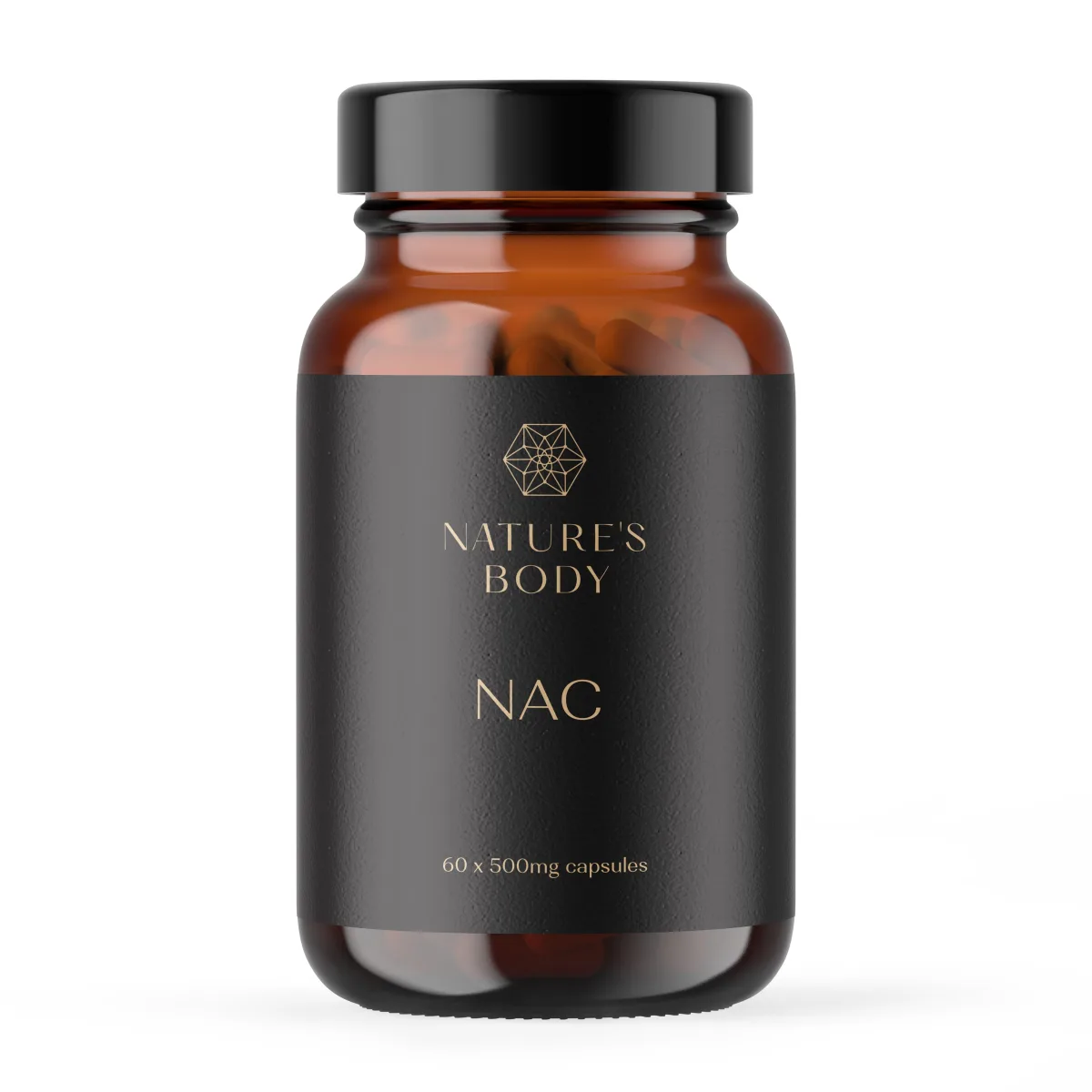
The captured front label says the bottle contains 60 capsules at 500 mg each. [22] The current seller direction says one or two capsules daily, which calculates to 500 to 1,000 mg per day. [25] [22] The captured side label says one or two capsules per day with food, then adds "twice daily," which could calculate to 1,000 to 2,000 mg per day. [23] [22] The conflicting records do not establish one recommended daily amount.
![[25]](/images/evidence/natures-body-nac/2026-07-29-seller-direction.webp)
The seller warning says the product is not recommended during pregnancy or breastfeeding unless advised by a health care professional. [25] The photographed side label instead excludes pregnant or lactating women. [23] These seller and package records do not establish one current warning.
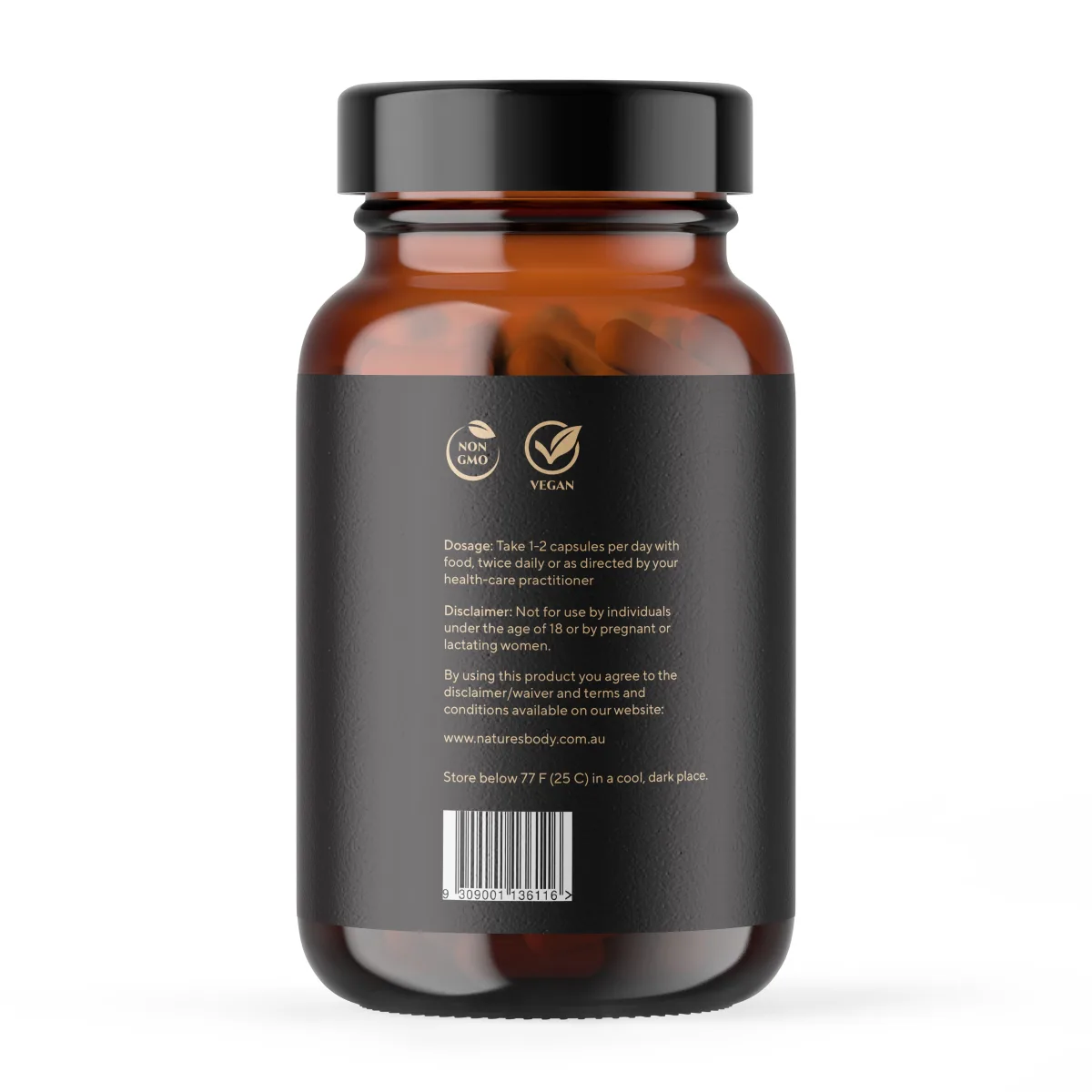
Australia's June 2026 Poisons Standard places oral acetylcysteine preparations labeled above 1 g per day in Schedule 2. [13] Oral preparations labeled at 1 g per day or less sit outside these Schedule 2 and Schedule 4 entries. [13] The captured directions can calculate to either 1,000 or 2,000 mg per day, so the label ambiguity spans those scheduling branches. [22] [23] Scheduling alone does not settle the product's overall compliance.
The seller page describes the product as a "formulated supplementary sports food." [24] That Australian classification depends on ingredients, dosage form, claims, and presentation. [14] The current Declared Goods Order covers certain orally consumed sport supplements promoted for performance-related therapeutic use and, since November 30, 2023, supplied as a tablet, capsule, or pill. [15] The captures establish capsule form and the seller's category wording, but they do not preserve the complete claims and presentation needed for a final classification. [22] [24] A product classified as a therapeutic good must be entered in the Australian Register of Therapeutic Goods (ARTG) before import, advertising, or supply. [14]
![[24]](/images/evidence/natures-body-nac/2026-07-29-seller-category.webp)
If the product qualifies as food under Standard 2.9.4 and NAC is used as a nutritive substance, the standard permits an added amino acid only if it is listed in Schedule 29 section S29-18 and stays within the applicable Column 2 limit. [16] It separately permits another nutritive substance listed in S29-19 within its Column 2 limit. [16] Those tables list L-cysteine but do not list N-acetyl-L-cysteine. [17] This conditional table check does not decide the product's legal category or status.
Food Standards Australia New Zealand (FSANZ) says a qualifying sports-food label also needs the prescribed name "formulated supplementary sports food"; directions covering quantity, frequency, and daily consumption; a diet-and-training statement; the prescribed age and pregnancy warning; a nutrition information panel; and an ingredient list. [18] The two captured panels do not show the full package, so this review cannot verify whether the prescribed name or every other required field is present across the complete label. [22] [23]
The captured lab-report viewport shows reports for NMN, resveratrol, and shilajit. It shows no NAC report within the captured area. [26] The crop does not prove that none appears elsewhere on the page, and it supplies no lot-specific NAC identity, purity, or assay result. [26]
Purchase link withheld
For advertisements about therapeutic goods, the Therapeutic Goods Administration (TGA) says testimonials or endorsements reached through an advertisement's links become part of that advertising. [19] As a precaution while this product's Australian classification and seller-page advertising remain unresolved, NutriScore is not rendering a purchase URL or clickable seller-page citation.
Sources
- DailyMed acetylcysteine injection label. U.S. National Library of Medicine. Retrieved 2026-09-01.
- DailyMed acetylcysteine solution label. U.S. National Library of Medicine. Retrieved 2026-09-01.
- FDA policy regarding N-acetyl-L-cysteine. U.S. Food and Drug Administration. Retrieved 2026-09-01.
- EMBL-EBI OLS4 record for NAD. EMBL-EBI. Retrieved 2026-09-01.
- Twice daily N-acetylcysteine 600 mg for exacerbations of chronic obstructive pulmonary disease (Placebo-controlled study on efficacy and safety of N-acetylcysteine high dose in exacerbations of chronic obstructive pulmonary disease [PANTHEON]). Jin-Ping Zheng et al. The Lancet Respiratory Medicine. Elsevier Ltd. Published 2014-01-30. DOI 10.1016/S2213-2600(13)70286-8. Retrieved 2026-09-01.
- Effects of N-acetylcysteine on outcomes in chronic obstructive pulmonary disease (Bronchitis Randomized on NAC Cost-Utility Study [BRONCUS]). Marc Decramer et al. The Lancet. Elsevier BV. Published 2005-04. DOI 10.1016/S0140-6736(05)66456-2. Retrieved 2026-09-01.
- 2024 mild-to-moderate COPD randomized trial. Yumin Zhou et al. Nature Communications. Springer Science and Business Media LLC. Published 2024-09-30. DOI 10.1038/s41467-024-51079-1. Retrieved 2026-09-01.
- Outcomes after Angiography with Sodium Bicarbonate and Acetylcysteine (Prevention of Serious Adverse Events following Angiography [PRESERVE]). Steven D. Weisbord et al. New England Journal of Medicine. Massachusetts Medical Society. Published 2018-02-15. DOI 10.1056/NEJMoa1710933. Retrieved 2026-09-01.
- The efficacy of N-acetylcysteine in the management of chronic obstructive pulmonary disease: a systematic review and meta-analysis. Xingmin Cai, Sha Peng, Shuixiang Mao, Yong Zhong, and Xiubin Yu. PeerJ. Published 2026-07-16. DOI 10.7717/peerj.21448. Retrieved 2026-09-01.
- FDA 101: Dietary Supplements. U.S. Food and Drug Administration. Retrieved 2026-09-01.
- National Institutes of Health (NIH) Office of Dietary Supplements (ODS) immune-function fact sheet, NAC section. National Institutes of Health Office of Dietary Supplements. Retrieved 2026-09-01.
- Health Canada N-acetyl-L-cysteine monograph. Health Canada. Retrieved 2026-09-01.
- Australian Poisons Standard, June 2026. Australian Government. Retrieved 2026-09-01.
- Therapeutic Goods Administration (TGA) guidance on importing or supplying sport supplements. Therapeutic Goods Administration. Retrieved 2026-09-01.
- Therapeutic Goods (Declared Goods) Order 2019. Australian Government. Retrieved 2026-09-01.
- Australian food standard for formulated supplementary sports foods. Australian Government. Retrieved 2026-09-01.
- Australia New Zealand Food Standards Code, Schedule 29. Australian Government. Retrieved 2026-09-01.
- Food Standards Australia New Zealand (FSANZ) sports-food labeling guidance. Food Standards Australia New Zealand. Retrieved 2026-09-01.
- Therapeutic Goods Administration (TGA) guidance on testimonials and endorsements in advertising. Therapeutic Goods Administration. Retrieved 2026-09-01.
- FDA Foods Program regulations under development. U.S. Food and Drug Administration. Retrieved 2026-09-01.
- U.S. Office of Information and Regulatory Affairs (OIRA) pending regulatory review, Regulation Identifier Number (RIN) 0910-AI91. U.S. Office of Information and Regulatory Affairs. Retrieved 2026-09-01.
- Nature's Body NAC front-label image captured 2026-07-29. Nature's Body. Retrieved 2026-09-01.
- Nature's Body NAC side-label image captured 2026-07-29. Nature's Body. Retrieved 2026-09-01.
- Nature's Body NAC seller category captured 2026-07-29. Nature's Body. Retrieved 2026-09-01.
- Nature's Body NAC seller directions and warning captured 2026-07-29. Nature's Body. Retrieved 2026-09-01.
- Nature's Body lab-report list captured 2026-07-29. Nature's Body. Retrieved 2026-09-01.
- The impact of N-acetylcysteine on lactate, biomarkers of oxidative stress, immune response, and muscle damage: A systematic review and meta-analysis. Marcin Sadowski, Emilia Zawieja, and Agata Chmurzynska. Journal of Cellular and Molecular Medicine. Wiley. Published 2024-12. DOI 10.1111/jcmm.70198. Retrieved 2026-09-01.
- The effects of N-acetylcysteine on recovery biomarkers: A systematic review and meta-analysis of controlled trials. Marzieh Nejati, Parvin Dehghan, Parsa Jamilian, and Meysam Zarezadeh. Journal of Food Biochemistry. Wiley. Published 2022-07. DOI 10.1111/jfbc.14116. Retrieved 2026-09-01.
Entries 22 through 26 are brand-controlled seller evidence.
Keep reading
Buyer hub
Best greens powders
Score-driven list pages built from the current ranking snapshot.
Rankings
Full score table
Compare overall, safety, efficacy, and transparency scores.
Tools
Label calculators
Run price, protein, transparency, and COA math locally.
Topic hub
Label reading guides
Follow the claim, dose, badge, allergen, and COA article cluster.
Topic hub
Safety and testing guides
Read the heavy-metal, COA, certification, and warning-label cluster.
Methodology
How scoring works
Read the organization-level scoring and corrections posture.
How this article was made
NutriScore has not commissioned independent clinical review of this article.
Read the editorial policy and scoring methodology. Sources favor primary canon, regulators, product labels, and peer-reviewed research; reputable secondary reporting is identified when used.
Corrections: send corrections or updated label/source evidence to support@nutriscore.fit or use the contact page.
Sources: 0 entries, all primary canon, last reviewed 2026-09-01.
For research and educational purposes only. Not medical advice.